2017 Ford Focus C Max Owners Manual
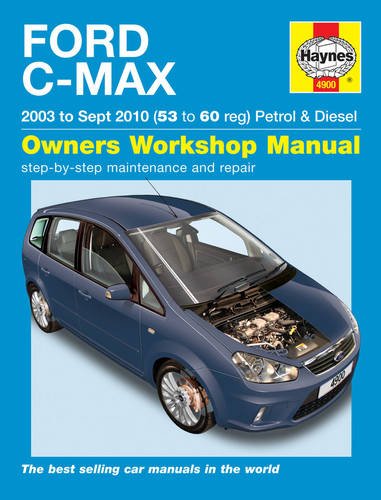
Ford C-Max The Ford C-Max is a compact multi purpose vehicle which was introduced in 2003 by Ford in Germany. Initially it was available only in Europe and partially in New Zealand and is the second smallest MPV from Ford, after the B-Max. In the USA it was released in September 2012 as Ford?s first hybrid-only version, which includes the CMax Hybrid. Later a plugin hybrid, the C-Max Energi was also launched in the USA market in late 2012. The available four-cylinder engines are the same as the Focus.
Not to be confused with. Ford C-Max Overview Manufacturer Production 2003–present Body and chassis 5-door Chronology Predecessor (hybrid models only) The Ford C-Max (stylized as Ford C-MAX and previously called the Ford Focus C-Max) is a produced by the since 2003. The Ford Grand C-Max has a larger. Ford introduced the C-Max in the United States as its first line of vehicles, which includes the C-Max Hybrid, released in September 2012, and the C-Max Energi, launched in October 2012. Although the C-Max was initially available only in Europe, the first generation was partially available in New Zealand. With the introduction of the new and, the C-Max is now the mid-sized in Ford's lineup, above the. First generation (2003–2010) First generation Overview Also called Ford Focus C-Max (2003–2007) Production 2003–2010 2004–2010 AssemblyDaniel Paulin Body and chassis 5-door Powertrain 1.6 L, 1.8, 2.0 1.6 L, 1.8 L, 2.0 L 4-speed 5-speed 6-speed 6-speed Dimensions 2,640 mm (103.9 in) Length 4,371 mm (172.1 in) Width 1,825 mm (71.9 in) Height 1,588 mm (62.5 in) 1,372–1,527 kg (3,025–3,366 lb) C-Max Mk I was the first product to use the, also used by the and the compact MPV.
Its internal code name is C214. It seats five passengers and has a large amount of cargo space, which can be increased by folding the rear seats flat. Some models feature diagonally sliding outer rear seats. It also shares the control blade independent rear suspension from the Focus. Engines and transmissions The available are the same as the Focus. 1.6 L was the basic engine for C-Max, 1.6 L Ti-VCT Duratec was also available.
Ford C-Max Hybrid on display at the entrance to Ford's plant The front-wheel drive hybrid has a 2-liter four-cylinder engine mated to an electric motor and a 1.4 for total power output of 188 hp (140 kW). The top speed in of 62 mph (100 km/h) and the car's top speed in hybrid mode is 115 mph (185 km/h). The hybrid has a maximum cargo volume of 52.6 cu ft (1,490 L) with rear seats folded flat, and 24.5 cu ft (690 L) in the cargo area behind the rear seats, providing more room than the regular Prius liftback, but less cargo room than the, which provides 67.3 cu ft (1,910 L) with the rear seats folded. The Hybrid is offered in two trims: The SE features cloth seating surfaces, system with A/M-F/M stereo with single-disc CD/MP3 player, and input jacks, six speakers, a multi-informational gauge cluster and color display screen, keyless entry, alloy wheels, and split-folding rear bench seat, plus a security alarm. The SEL adds leather seating surfaces, with AM/FM stereo with single-disc CD/MP3 player and and input jacks, a premium system, power dual front seats, keyless access, push-button start system, and other luxury features.
For the 2017 model year, the SEL trim level on both the C-Max Hybrid and Energi will be renamed to the Titanium trim level and also all the 2017 Ford C-Max Hybrids and plug-in Energis are expected to receive a new facelift with restyled headlights and taillights. The Energi Plug-In Hybrid is only available in SEL trim. But for the 2017 model year the C-Max Energi is also available on the SE trim level. EPA ratings Ford's design aimed for the C-Max Hybrid to deliver better than the. Ford had reduced its estimated fuel economy twice, once in 2013 and again in 2014, with the second revision placing fuel economy below the Prius V.
The (EPA) initially rated the hybrid model at 47 mpg ‑US (5.0 L/100 km; 56 mpg ‑imp) with the same rating for combined/city/highway cycles. These ratings allowed the C-Max Hybrid to improve the fuel economy of the Toyota Prius v by 3 mpg -US on the city cycle, by 7 mpg -US on the highway cycle and by 5 mpg -US combined.
However, after criticism and lawsuits about worse-than-expected real-world fuel economy, in August 2013 Ford voluntarily lowered the EPA ratings and issued customer rebates. The revised fuel economy ratings were reduced to 45 mpg ‑US (5.2 L/100 km; 54 mpg ‑imp) for city driving, 43 mpg ‑US (5.5 L/100 km; 52 mpg ‑imp) for combined and 40 mpg ‑US (5.9 L/100 km; 48 mpg ‑imp) for highway. The revised rating for the updated 2013 C-Max Hybrid is still better than the 42 mpg ‑US (5.6 L/100 km; 50 mpg ‑imp) combined rating for the Toyota Prius v. A second downward revision was made during June 2014.
Ford boosted the on-road fuel efficiency of its three 2013 model year hybrids through changes in the cars' vehicle control software in an effort to improve customer satisfaction. The upgrade was offered free of charge to existing owners of these hybrids. This section needs to be updated. Please update this article to reflect recent events or newly available information. Last update: The section is missing the fuel economy downgrade that took place in June 2014 (June 2014) In December 2012, reported that and Green Car Reports have found that the 2013 Ford C-Max Hybrid and, which share the same powertrain, do not deliver their triple 47 mpg ‑US (5.0 L/100 km; 56 mpg ‑imp) EPA ratings in real-world use. After running both vehicles through Consumer Reports real-world tests, the magazine found that C-Max hybrid achieved a combined fuel economy average of 37 mpg ‑US (6.4 L/100 km; 44 mpg ‑imp), with 35 mpg ‑US (6.7 L/100 km; 42 mpg ‑imp) and 38 mpg ‑US (6.2 L/100 km; 46 mpg ‑imp) for city and highway. Green Car Reports found that the C-Max delivered 37 mpg ‑US (6.4 L/100 km; 44 mpg ‑imp) over 50 mi (80 km) of mixed freeway and urban driving, and 40 mpg ‑US (5.9 L/100 km; 48 mpg ‑imp) over 240 mi (390 km) mostly at freeway speeds.
Consumer Reports concluded that the overall fuel economy for the C-Max Hybrid is off by 10 mpg, representing a deviation of about 20%. The consumer magazine said that their overall fuel economy results are usually close to the EPA's combined-mpg estimate, and among current models tested, more than 80% fall within 2 mpg margin. The largest discrepancy the magazine has previously found was 7 and 6 mpg for the and the, respectively. Ford responded in a statement, saying that, ' Early C-MAX Hybrid and Fusion Hybrid customers praise the vehicles and report a range of fuel economy figures, including some reports above 47 mpg. This reinforces the fact that driving styles, driving conditions, and other factors can cause mileage to vary.'
A few days later the Environmental Protection Agency(EPA) said it will review claims that two new Ford hybrid vehicles are not delivering the advertised 47 mpg. Linc Wehrly, Director of Light-duty Vehicle Center Compliance Division at EPA's National Vehicle and Fuel Emissions Laboratory in commented that hybrids have far more variability in miles per gallon than a conventional vehicle. All vehicles are run through the same EPA fuel-efficiency test but the test is not administered by the EPA, instead the automakers conduct the test and EPA often conducts reviews. Most vehicles' real-world gas mileage is less than the EPA sticker number, and can often be 20% less than the sticker number depending on speed, temperature and other factors.
The EPA explained that with hybrids the gap is much wider, as high as a 30% drop. The problem lies with EPA's rules that allow automakers to group similar vehicles together and apply the same ratings and Ford did exactly that with the Fusion hybrid and C-Max hybrids. Ford Motor Co. Officials said the real-world fuel-efficiency in the C-Max Hybrid depends on driving style and other outside factors, and the company does not expect the car's fuel efficiency numbers to change, as they followed EPA's test guidelines. A Ford spokesman also said they are working closely with the EPA to determine if any changes are needed for the industry relative to hybrid vehicle testing. The carmaker explained that several factors can affect hybrid fuel economy more than regular gasoline engines, and among the differences highlighted were speed, as the difference between 75 mph and 65 mph can produce a 7 mpg difference in fuel economy; outside temperature, the difference between 40 °F and 70 °F can result in a 5 mpg difference; and vehicle break-in, the difference from 0 miles to 6,000 miles can be a 5 mpg difference.
Due to the criticism and lawsuits, in July 2013 Ford announced that it would boost the on-road fuel efficiency of the C-Max and the other two 2013 hybrids through changes in the vehicle control software in an effort to improve customer satisfaction. In August 2013, the carmaker voluntarily reduced the official EPA ratings in August 2013. Ford also announced it will issue rebates to some 32,000 C-Max owners who will be notified by mail. The payment will be US$550 to U.S. Customers who purchased a C-Max and US$325 to customers who have leased the hybrid car. After the Ford announcement, the EPA stated that it will update the test procedures used to assign fuel economy ratings to cars ' to ensure that the requirements keep pace with industry trends and innovations in advanced high-efficiency vehicles.'
Ford used the Fusion Hybrid test to generate the fuel economy label for the C-Max Hybrid following EPA's rules. These, which date to the 1970s, specify that automakers can use the same fuel economy numbers for similar-size vehicles equipped with the same engines and transmissions. The EPA requires automakers to test the fuel economy of the biggest-selling model in a specific category. In its midsize hybrid class, Ford tested the Fusion sedan version because it was the top seller, and Ford was allowed to apply the 47 mpg ‑US (5.0 L/100 km; 56 mpg ‑imp) achieved with the Fusion Hybrid in combined, city and highway driving to the C-Max hybrid. Ford has no plans to change the fuel economy ratings on the 2013 Fusion hybrid.

Plug-in hybrid Ford C-Max Energi Overview Manufacturer Production 2012–November 2017 2013–2017 Assembly United States: Body and chassis 5-door Related Powertrain 7.6 20 mi (32 km). Rear view The C-Max Energi starts at US$27,995 including the destination fee. According to its battery size, the plug-in car qualifies for a of US$4,007, and it is eligible for, such as 's US$1,500 rebate. Specifications The C-Max Energi was designed with total 188 hp (140 kW) in hybrid mode delivered by a 2.0-liter four-cylinder gasoline engine plus an electric motor powered by a 7.6 pack, which is smaller and lighter than used in previous Ford generation hybrids. The electric drivetrain can produce a peak power of 68 kW, limited by the size of the electric motor and the power delivery capability of the battery pack, and delivers a total system power of 195 hp (150 kW) in mode (EV mode).
The C-Max Energi is capable of reaching a top electric-only speed of 85 mph (137 km/h), exceeding the by more than 20 mph (32 km/h). The top speed in hybrid mode is 115 mph (185 km/h). The C-Max Energi uses a system capable of capturing and reusing more than 95% of the braking energy normally lost during the braking process. The charging time for the C-Max Energi is 7 hours with a 120 volt charger, and 2.5 hours with a 240 volt charger. The charge port has a LED light ring like the and is located on the driver’s side and near the front of the car. The light ring illuminates to indicate charge status.
The battery is covered by an eight years or 100,000 mi (160,000 km) component warranty. Ford equipped the C-Max Energi with a button mounted in the center stack that enables drivers to choose an electric-only driving mode, and allows the driver to switch vehicle operation between three modes: electric-only driving without gasoline engine power ('EV Now' setting); normal hybrid mode where the powertrain blends electric and gasoline engine power as appropriate ('EV Auto' setting); or a battery-saving mode that reserves the battery power for later use ('EV Later' setting). Like the, the C-Max Energi comes with a SmartGauge with EcoGuide that provides in-vehicle customizable displays, including instantaneous fuel economy readings and coaching functions to help drivers understand and optimize their fuel efficiency. The plug-in hybrid also features ECO Cruise which saves energy by relaxing acceleration compared to standard. EPA ratings. Ford C-Max Energi badge.

Ford designed the C-Max Energi plug-in hybrid to deliver better (MPG-e) in than the. Initially, the EPA rated the Energi combined city/highway fuel economy in at 100 MPG-e (2.4 L/100 km). Later, due to complaints from owners not achieving the sticker fuel economy, and following a technical review, the official EPA rating in EV mode was downgraded to 88 MPG-e (2.7 L/100 km). In a similar way, initially the EPA rating in was 43 mpg ‑US (5.5 L/100 km; 52 mpg ‑imp), but it was later downgraded to 38 mpg ‑US (6.2 L/100 km; 46 mpg ‑imp). EPA's rating for combined EV/hybrid operation is 51 MPG-e (4.6 L gasoline equivalent/100 km), which allows the C-Max Energi to rank in sixth place, together with the Fusion Energi, among the top ten EPA-Rated Fuel Sippers since 1984.
The C-Max Energi has an of 20 mi (32 km), for a total EPA certified range of 550 mi (890 km), which in 2012 surpassed both the (380 mi (610 km)), and the Prius Plug-in Hybrid (540 mi (870 km)). Ford C-Max Solar Energi concept exhibited at the 2014 Ford released the C-Max Energi in the U.S. Market by mid October 2012, and during that month 144 units were delivered to U.S. Retail customers, and ended with 2,374 units delivered in 2012.
The C-Max Energi ranked as the fifth top selling plug-in electric car in the U.S. During 2013, and climbed to number fourth in 2014.
Over 35,700 units have been sold in North America and Europe through December 2016, with 33,509 units delivered in the U.S. Through December 2016, 967 units in Canada through December 2016, and 1,229 in the Netherlands in 2015. C-Max Solar Energi concept Ford Motor Company announced the C-MAX Solar Energi concept, a -powered vehicle to run electrically without depending on the electric grid for fuel. The C-MAX Solar Energi Concept was unveiled at the 2014 International CES in Las Vegas.
This is a collaborative project of Ford, and the. Recognition. The C-Max Energi was awarded the 2012 by the at the 2012. Both the Ford C-Max hybrid and the Energi plug-in hybrid were among the five finalists for the 2013 awarded by the at the 2012. In Europe, the C-Max is designed with lower VOC and allergens, along with several other Ford vehicles.
Production For the North American market, the C-Max Hybrid is assembled alongside the 2012 Focus and at in Michigan. The C-Max Energi is also assembled in Michigan. Since 2015 all European versions are built in the Saarlouis Body & Assembly, Germany. See also. References. Archived from on 2011-05-25.
Retrieved 2010-10-05. January 25, 2007, at the. Retrieved 2009-07-18. Paukert, Chris (2009-09-03). Retrieved 2010-10-05. Abuelsamid, Sam (2009-09-15).
Auto blog.com. Retrieved 2010-10-05. Korzeniewski, Jeremy (2011-06-09). Retrieved 2011-06-09. Job (2012-10-12). Retrieved 2012-10-13.
^ HybridCars.com and Baum & Associates (2012-10-04). Retrieved 2012-11-02. Rotary gear pumps. See September 2012 Hybrid Car Sales Numbers. Jim Motavalli (2012-11-02). Retrieved 2012-11-03. Retrieved 2018-03-12.
Retrieved 2011-06-18. ^ Suzanne Kane (2012-07-05). Retrieved 2012-07-21.
Retrieved 2017-04-06. ^ Ford Media (2012-08-07). Retrieved 2012-08-07. ^ Ford Motor Co. Retrieved 2012-10-13. Ford Motor Co.
Retrieved 2012-10-13. Retrieved 2011-12-17. ^ Nick Bunkley, Bradford Wernle and Gabe Nelson (2013-08-15). Retrieved 2013-08-16. Sebastian Blanco (2013-08-15).
Autoblog Green. Retrieved 2013-08-16. See Press Release. ^ John Voelcker (2013-07-17). Green Car Reports.
Retrieved 2013-08-16. Jeff Cobb (2012-11-02). Retrieved 2012-11-02. Ford Media (2012-11-02).
Retrieved 2012-11-02. ^ Jeff Cobb (2013-01-08). HybridCars.com and Baum & Associates. Retrieved 2013-02-09. See the section: December 2012 Plug-in Electric Car Sales Numbers.
^ Jeff Cobb (2014-01-06). HybridCars.com and Baum & Associates. Retrieved 2014-01-07. Trudell, Craig.
Retrieved 28 February 2014. ^ Jeff Cobb (2015-01-06). HybridCars.com and Baum & Associates. Retrieved 2015-08-08. See section 'December 2014 Plug-in Hybrid Car Sales Numbers'.
^ Cobb, Jeff (2016-01-06). HybridCars.com and Baum & Associates. Retrieved 2016-03-20. See section 'December 2015 Plug-in Hybrid Car Sales Numbers'.
Jake Holmes (2012-12-04). Retrieved 2012-12-24. ^ Consumer Reports (2012-12-06). Retrieved 2012-12-24. ^ John Voelcker (2012-11-20).
Green Car Reports. Retrieved 2012-12-24. ^ Jerry Hirsch (2012-12-06). Retrieved 2012-12-24. ^ David Shepardson and Karl Henkel (2012-12-08).
Retrieved 2012-12-24. Woodyard, Chris.
Retrieved 28 February 2014. KARL HENKEL (2012-12-14).
Retrieved 2012-12-24. Retrieved 2012-12-24. Bill Vlasic (2013-08-15). Retrieved 2013-08-17. ^ and (2014-10-03). Retrieved 2014-10-06. Retrieved 2017-04-06.
Sebastian Blanco (2012-07-25). Autoblog Green. Retrieved 2012-07-24. ^ Philippe Crowe (2012-10-11).
Retrieved 2012-10-11. Ford media (press release) (2012-07-20). Retrieved 2012-07-21. Ford Motor Company (2012-11-08). Archived from on 2012-11-11. Retrieved 2012-12-02. EPA ratings in MPG-e for combine, city and highway cycles.
Sebastian Blanco. Autoblog Greendate=2012-10-11.
Retrieved 2012-10-11. See details in Press Release. and (2014-10-10). Retrieved 2014-10-11. Excludes all-electric vehicles. Click on the tab 'EPA Rated - All Years.
Ford Focus Sw
The 2013-2014 Fusion/C-Max Energi has a combined electric/hybrid fuel economy of 51 MPG-e, 55 MPG-e in city and 46 MPG-e in highway. Jim Motavalli (2012-10-11). Retrieved 2012-10-17. HybridCars.com and Baum & Associates (2012-11-04). Retrieved 2012-11-04. Cobb, Jeff (2017-01-05). HybridCars.com and Baum & Associates.
Retrieved 2017-02-20. Klippenstein, Matthew. Green Car Reports 7date=February 2016. Retrieved 2017-02-21. Tesla Model S sales figures from IHS data. Jose, Pontes (2016-01-07). Retrieved 2016-03-20.
2 January 2014. Retrieved 2 January 2014. LeBeau, Philip (2014-01-02). Retrieved 2014-01-02. Sebastian Blkanco (2012-01-26). Autoblog Green.
Retrieved 2012-01-26. Sebastian Blanco (2012-11-29). Retrieved 2012-11-29. Ford article on Green vehicles.
Retrieved 2011-01-28. External links Wikimedia Commons has media related to.
Wikimedia Commons has media related to., December 2013.